Creative Biolabs is offering the most comprehensive services for antibody development projects. With strict regulation and effective execution, we are dedicated to providing the most valuable solutions to complete your projects.
HighlightsCreative Biolabs is offering the most comprehensive services for antibody development projects. With strict regulation and effective execution, we are dedicated to providing the most valuable solutions to complete your projects.
HighlightsCreative Biolabs has established a broad range of platforms for developing novel antibodies or equivalents. These cutting-edge technologies enable our scientists to meet your demands from different aspects and tailor the most appropriate solution that contributes to the success of your projects.
HighlightsWith deep understanding in antibody-related realms and extensive project experience, Creative Biolabs offers a variety of references to help you learn more about our capacities and achievements, including infographic, flyer, case study, peer-reviewed publications, and all kinds of knowledge that can assist your projects. You are also welcome to contact us directly for more specific solutions.
HighlightsGet a real taste of Creative Biolabs, one of the most professional custom service providers in the world. We are committed to providing highly customized comprehensive solutions with the best quality to advance your projects.
HighlightsBivalent antigens, which possess two distinct binding sites, present unique challenges and opportunities for researchers. Precisely characterizing the affinity and kinetics of these complex interactions is essential for developing next-generation biologics, understanding disease mechanisms, and ensuring therapeutic efficacy. Creative Biolabs stands at the forefront of biophysical analysis, offering a specialized Bivalent Antigen Affinity Measurement service. With over two decades of expertise, our seasoned specialists leverage state-of-the-art platforms and sophisticated analytical models to dissect the nuanced binding behavior of bivalent systems. We provide not just data, but actionable insights into the avidity, kinetics, and thermodynamics that govern your molecules' performance.
A monovalent interaction follows a straightforward 1:1 binding model (A+B↔AB). However, the binding of an antibody to a bivalent antigen is a two-step process that introduces a significant layer of complexity.
This two-site binding results in a much stronger, more stable interaction known as avidity. Avidity is the accumulated strength of multiple affinities and is often a more biologically relevant parameter than simple affinity. Measuring it accurately, however, requires specialized approaches that can dissect the individual association (kon) and dissociation (koff) rates for both binding events.
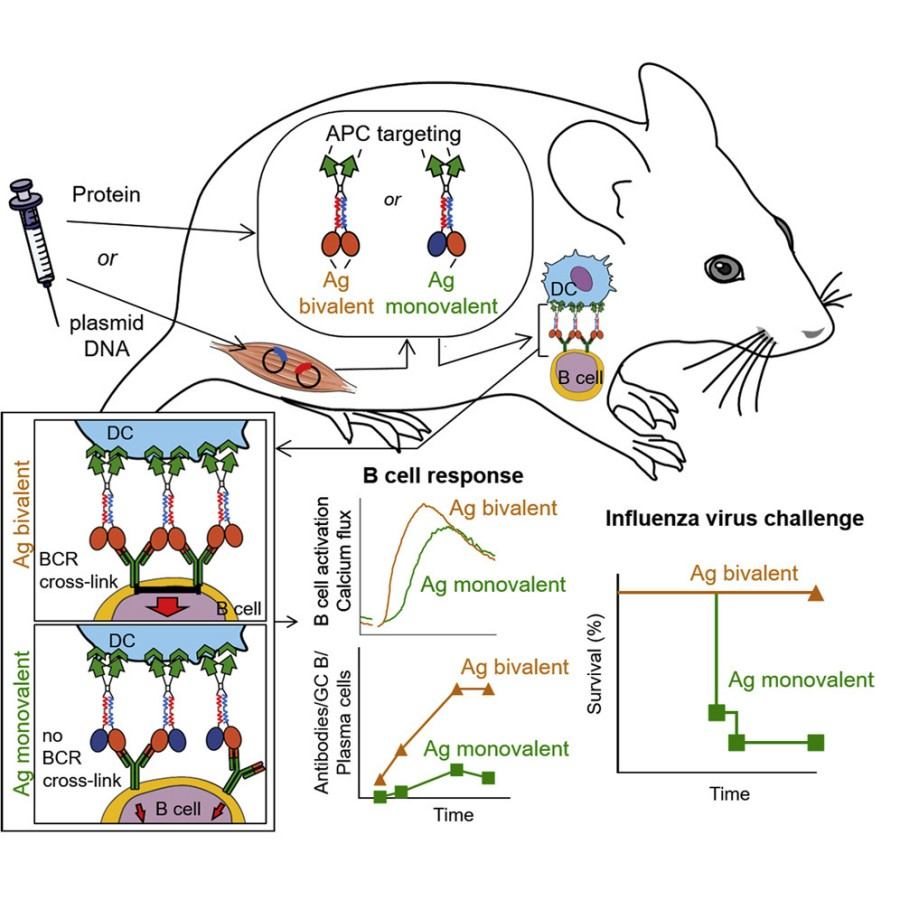 Fig. 1 Antigen bivalency of targeted vaccines enhances B cell responses/antibody production.1
At Creative Biolabs, we understand that a one-size-fits-all approach is insufficient for the complexities of bivalent interactions. We have curated a suite of cutting-edge technologies to provide a multi-faceted and robust analysis tailored to your specific project needs.
SPR technology is the cornerstone of modern affinity measurement. It provides real-time, label-free data on the association and dissociation of molecules, making it ideal for the detailed kinetic characterization of bivalent antigen binding.
Bio-Layer Interferometry (BLI) offers a fluidics-free and highly versatile alternative to SPR, making it exceptionally well-suited for screening and initial characterization of bivalent interactions.
Isothermal Titration Calorimetry (ITC) is the only technique that directly measures the heat absorbed or released during a binding event. This provides a complete thermodynamic profile of the interaction in-solution, without the need for immobilization.
Creative Biolabs is committed to adopting and developing next-generation technologies to solve the most complex analytical challenges.
We offer a fully customizable service workflow, guided by our expert scientists in close consultation with you.
To further support your research, Creative Biolabs offers a suite of Affinity Measurement related services:
Unlock the true potential of your bivalent molecules. Contact us today to discuss your project with one of our affinity measurement experts and receive a customized quote.
Q: What is the difference between affinity and avidity in the context of my bivalent antigen?
A: Affinity refers to the strength of a single binding interaction between one arm of your antibody and one epitope on the antigen (KD1). Avidity is the total, enhanced binding strength that results from both antibody arms binding to the bivalent antigen. Avidity accounts for the effects of the second binding event and is often a much higher (tighter) value than the intrinsic affinity.
Q: Which technology is best for my bivalent antigen affinity measurement project?
A: The best technology depends on your specific goals. SPR is excellent for detailed kinetic analysis and thermodynamic insights. BLI is ideal for higher-throughput screening of many candidates. ITC provides a true in-solution measurement of binding thermodynamics. Our experts will consult with you to recommend the most appropriate platform for your project.
Q: Can you measure the affinity if my bivalent antigen is expressed on a cell surface?
A: Yes. While challenging, we have specialized platforms like Surface Plasmon Resonance Microscopy (SPRM) and can develop advanced cell-based assays using flow cytometry or other methods to measure the binding of antibodies to bivalent antigens in their native cellular environment.
Q: What kind of data modeling do you use for bivalent interactions?
A: We go beyond the standard 1:1 binding model. For SPR and BLI data, we utilize a 1:2 bivalent analyte model or other appropriate heterogeneous ligand/analyte models. These sophisticated models allow us to dissect the individual kinetic steps of the binding process, providing a much more accurate and detailed picture of the interaction than a simple model can offer.
All listed services and products are For Research Use Only. Do Not use in any diagnostic or therapeutic applications.